Germanic "Volkswanderung"
Obscured Origins
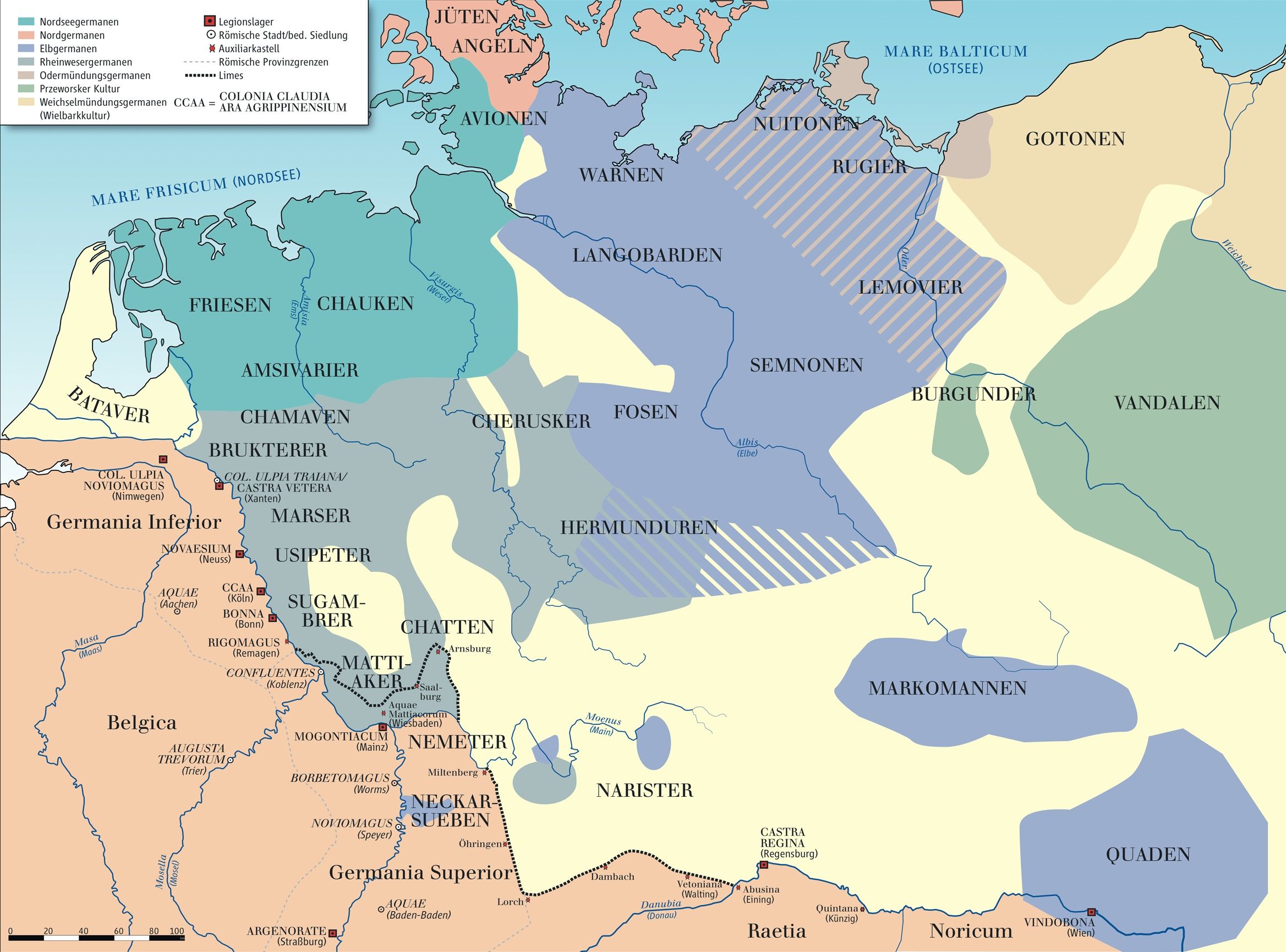
First Notice
the first person to use the word Germani is Poseidonius , a Greek historian, in 100 BC. 2 It may be a corruption of an early German word, Gaizamannoz ('spearmen'), used as a name by one community.
Die Kimber
it was the Huns who indirectly brought down the roman empire,but actually the story begins with the march of the Cimbrians and teutons 120 BC
This first great germanic move towards the south starts the later drama of the migration ,after this first shock wave the Romans would always look towards their borders with a mixture of growing distrust and naked fear. ..as if these blonde giants were the forboding of ever respawning hordes from the South to take possession of the South by furious battles against the Roman world power .
This inspired the roman poet and statesman Tacitus to a very respectful judgement about the Cimbrians , than still a small tribe but of immense glory .
Die Teutonen
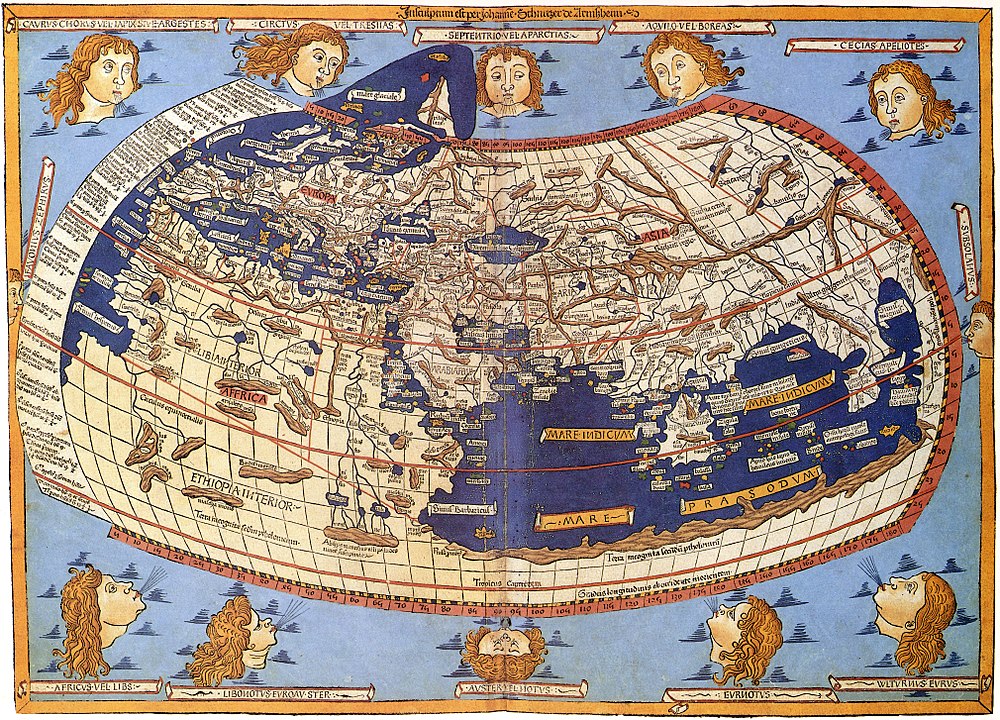
The Teutons are not mentioned yet in Tacitus' writings, but they are by the greek navigator Pytheas (from the Greek colony of Massalia (modern-day Marseille, France) ) who after his spectacular journey to the north mentions (According to The Natural History by Pliny the Elder) that the Gutones, a people of Germany, inhabiting the shores of an estuary of the Ocean called Mentonomon , their territory extending a distance of six thousand stadia; that, at one day's sail from this territory, is the Isle of Abalus, upon the shores of which, amber is thrown up by the waves in spring, it being an excretion of the sea in a concrete form; as, also, that the inhabitants use this amber by way of fuel, and sell it to their neighbours, the Teutones.The "Gutones" is a simplification of two manuscript variants, Guttonibus and Guionibus, which would be in the nominative case Guttones or Guiones, the Goths in the main opinion
With this first mention of the tribe of the Teutons the history of the germanic people begins for many historians
The Flood
The Cimbrian flood (or Cymbrian flood) was a large-scale incursion of the North Sea in the region of the Jutland peninsula (Denmark) in the period 120 to 114 BC, resulting in a permanent change of coastline with much land lost. The flood was caused by one or several very strong storm(s). changing the coastline and salting the soil. and an incipient famine forced most of the tribe to leave their settlement area the The Teutons later joined them The Cimbri migrated south and, together with the Ambrones and Teutons, came into conflict with the Romans, precipitating the Cimbrian War (113 to 101 BC)
The contemporary Greek geographer Strabo, though sceptical, describes the flood and its consequences thus:
As for the Cimbri, some things that are told about them are incorrect and others are extremely improbable. For instance, one could not accept such a reason for their having become a wandering and piratical folk as this that while they were dwelling on a peninsula they were driven out of their habitations by a great flood-tide; for in fact they still hold the country which they held in earlier times; and they sent as a present to Augustus the most sacred kettle in their country, with a plea for his friendship and for an amnesty of their earlier offences, and when their petition was granted they set sail for home; and it is ridiculous to suppose that they departed from their homes because they were incensed on account of a phenomenon that is natural and eternal, occurring twice every day. And the assertion that an excessive flood-tide once occurred looks like a fabrication, for when the ocean is affected in this way it is subject to increases and diminutions, but these are regulated and periodical.
the giant wandering tribe likely numbered around 150000 people headed south she moved to bohemia, silesia and moravia finally into the danube basin and the eastern alps
The Romans were weary of drifting nature-tribes and horrible rumours circulated Rome only to be surpassed by later events.
they told each other on other side of the the tiber that two gigantic marching columns of a total of 300,000 people are on the way , a huge army of giant sized warriors with blue eyes and in addition still larger flocks of children and women
these pitiless gigantic barbarian were as a giant incoming storm cloud in search of land and loot. Opposing cities in their path would be massacred.
Rumors like this must have indeed sounded frightening

Inevitable Encounters
Soon after a first attack took place of the Cimbri and teutons on Noricum the subject of rome today's austria.
The roman consul Gnaius Papirius Carbo had the alpine passes manned in order to prevent the germans marching through italy when after a time no attack ensues..out of arrogance. Carbo makes his first mistake. he advanced against the Kimbern and accuses them of to have attacked the norica allied noricum.
That was the time when romans and children got to know the Kimbern. They insured eagerly by this friendship to have known nothing and promised to leave peacefully because all they are looking for unconquered land to establish themselves. carbo gave them guides with supposedly to help them find an appropriate area to settle… but that was only a pretext . The consul had instructed his guides sent with the barbarians to make a longer detour .while he marched his two legions in an attempt to cut them off and ambush to destroy them from behind.
The consul would pay dearly for his treachery.
Noreia
the battle took place 113 before christ at Noreia a place north of the today's klagenfurt
Carbo attacked the Kimbern maliciously from behind.
why the consul believed the barbarians would be lured and defeated so easily remain its secret forever.
The primitive but definitely effective fighting style of the germanic peoples proved to be too much to handle for the surprised .two Legions
12,000 men were torn apart by the furious bashing and cleaving of the barbaric warriors. The only reason they were not destroyed completely was the superstitious nature of the germans… as a heavy thunderstorm broke out the fear over the wrath of the gods made them break off the fight.
The beginning of the long and arduous roman-germanic struggle is characterized by trics and deceit but also a gross overestimation of of a hitherto mostly victorious great empire this was not the best attitude or starting point for a trusting future . The romans were certainly shaken but Lady Fortuna showed herself a trusty ally once again. the Kimbern and Teutons put their march no further south but moved northwest to the celtic helvetia in the present Switzerland a few of them settled themselves at neckar and main but most of them went to gallia further towards an odyssey which had led them after about 15 years over spain lead back to gallia and Italy.
It must have been an impressive marching column ,the best warriors at the the front and at the rearguard ,mothers and children on the train with the ox cart . the riders to the flank with the cattle and in front the old women determining the right way ,reading the blood of captives.
contemporary chroniclers described the corresponding procedure in detail
Among the women were also wisdom-speaking women, oracles and seers. priestesses with gray hair in white robes and broad clasps coats held together with bronze belts and walking barefoot. These went in the army camp with drawn swords towards The confined prisoners and led them to a giant bronze pot filling about 20 amphora. There was also a ladder which one of the priestesses ascended and then above the vessel .one by one . the captives were cut the throat and with the blood flowing into the cauldron they practiced some kind of divination. others they slit open the body and foretold prophecies from the intestines where according to the gods forthcoming victories were declared. during the fight they drummed on the skins stretched over the carts and wagons so tight that it created an ominous loud sound.
Migration during this time meant laborious work and clearing paths day after day month for month in all weathers leading the way to search the land and future of the people. The further the Kimbern and teutons went south the more bearable it became. Whenever possible they followed the rivers because they gave them direction and a goal but at the same time It could present insurmountable obstacles. unless the leaders found a path for the crossing or passing but sometimes that took days.

Marcus Junius Silanus (109 BC)
109 BC the Kimbern encountered the army camp of the roman consul Marcus Junius Silanus at the Rhine and asked for available land they wanted and assured their peaceful intentions and instead of waging war they would pay the allotted land, and they were to be considered a roman ally.
With this he repeated the propostion already don before to his predecessor. however, this was met with astonishment and mockery because of their fierce appearance and disbelief in the peaceful intentions of the Germans.
The search for land would be categorically rejected by the Roman Senate.
shortly after the emissaries had returned to their people they were attacked by Marcus Junius Silanus
but also this second battle the romans did not win. it came to another debacle this time four legions fell… about 24,000 roman soldiers were left on the battlefield and again the incomprehensible instead of turning to Rome for revenge the Kimbern and Teutons continued their quest away from Rome through Gallia again decide by the tribes’ Seeresses
Indomitus
105 BC The Kimbrian-teutonic main force encounters three roman forces that stood at the rhone. it was the same old game . both the legions of the former consul the legate Marcus Aurelius Scaurus as well as that of the proconsul Quintus Servilius Caepio and the consul Gnaeus Mallius Maximus were defeated at Arausio the nowadays orange.
With an estimated over 80,000 fallen soldiers this one of the biggest defeats in the long roman history.
Im these Battles the germanic peoples must have shown an often seemingly pointless brutality.
the description of the historical writer livius is handed down the generations :
80,000 Romans and allies were killed 40,000 servants and camp followers slaughtered.
all booty was sacrificed to the gods
the robes of the fallen and
prisoners were torn apart
gold and silver thrown into the river
the horses drowned and the captives
hung from the trees.
of the whole army, only ten remained to tell the sad story.
Plutarch tells us that Ambrones , unsurpassed in their battlefield valor ,alone numbered more than 30,000 and were the most warlike division of the enemy, who had earlier defeated the Romans under Gnaeus Mallius Maximus and Quintus Servilius Caepio. The Ambrones followed a custom observed amongst Celts in the shouting the name of their tribe going into battle. and wrote irresistible in their foolhardiness their daring and the strength of their arms they meet at the battles with the speed and force of a firestorm none of them were able to keep up their resistance but all of them they met like prey dragged away and later sacrificed or lashed down equally.
Rome saved by foreign gods
Even if the numbers are exaggerated they do illustrate the deep horror of the Romans over the “will to destroy” and the brutality of the enemy
Even though the germanic tribes with the slaughter of captured enemies wanted to pay homage to their gods their cultic cruelty didn’t contribute to much understanding…. especially not with the already prejudiced romans.
Once again the wise women had objections against the march to italy even though the country lay defenceless before them.
The Kimbern crossed the River Po and continued towards spain while the teutons and Abrones plowed plundering through Gaul but neither inspain nor in gaul did the germans find A homeland.
Kimberians teutons and Ambrones met again at the Seine river and decided this time to head on the roman heartland ,to the capital over the Tiber to italy to march on Rome. the time of decision had come
they marched as one for a time but after several weeks separated
teutons and ambrones wanted to cross the western alpes and the kimbrians wanted to cross the Eastern Alpes
to this pincer move, however . it would never come Rome finally had found the right leader For it s legions.
Gaius Marius a warhorse from the old school a man that approached the task with a cool head.
finally realizing the barbarian threat and pledging to exorcise it from Roman lands. He had greatly reformed the Roman warmachine enlarged and modernized it. separation of the two barbarian hordes in their decision on crossing the alpes played right in his hand.

Loki's Punishment
in the myth, there were many times that the Gods made Loki make amends for his pranks. However, Loki received his heaviest punishment right before the Ragnarok.
For his many crimes against them, the gods eventually forge a chain from the entrails of Loki’s son Narfi (Sons of Loki, Vali and Nari, were brought there. Vali, in the form of a wolf, killed his brother Nari.) and tie him down to three rocks inside a cave. A venomous serpent sits above him, dripping poison onto him. Loki’s apparently very faithful and loving wife, Sigyn, sits at his side with a bowl to catch the venom. But when the bowl becomes full, of course, she has to leave her husband’s side to pour it out. When this happens, the drops of venom that fall onto him cause him to writhe in agony, and these convulsions create earthquakes. And in this state he lies until breaking free at Ragnarok.
Loki was punished many times by Norse gods. He got punished by Thor when he deliberately cut the hair of Sif – Thor’s wife. Freya also punished him for stealing her necklace. The Norse gods decided to kill Loki unless he cleaned the mess he made with the giant builder of Asgard wall. He got away with the punishment easily with his intelligence. But not this time!
The Capture of Loki
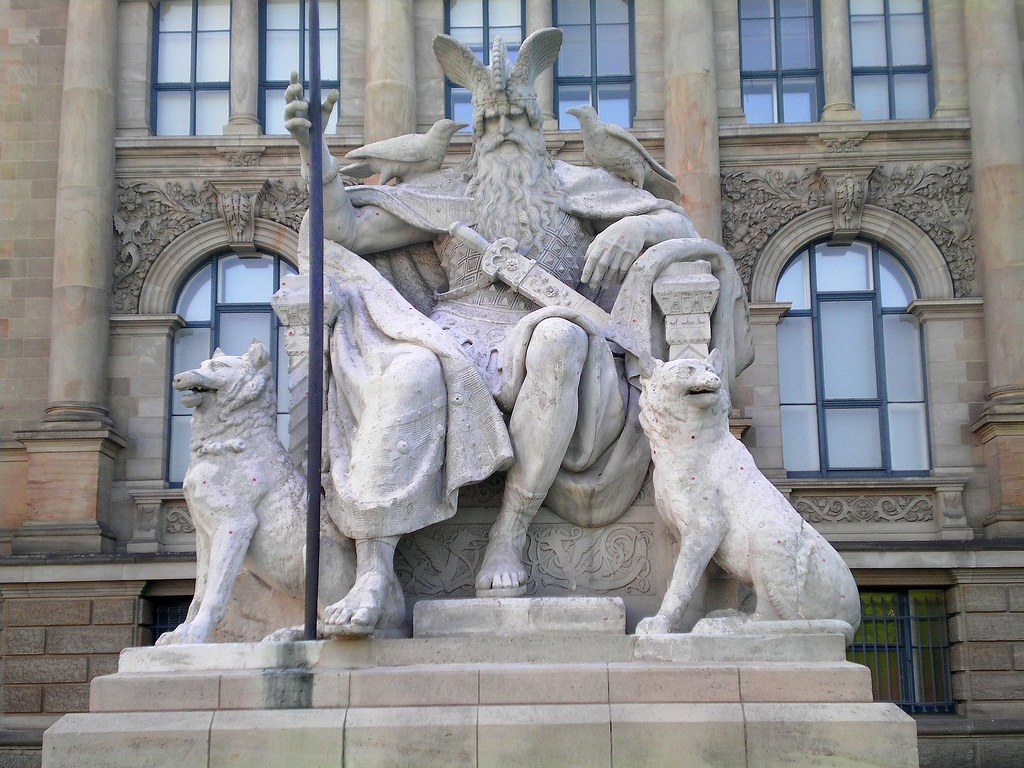
Loki did not stay still to be bound and got a fatal blow by the Gods. He quickly knew how serious the situation was and escaped. He found a mountain in the middle of nowhere to build himself a house. His new house had four doors so that he could observe who was coming close. Every day he shapeshifted himself into a salmon and hid in the water Franangursfors. When the nights fell in, he turned back to Loki’s appearance. Odin on his high throne could see the place where Loki was hiding. He instantly assembled to Gods and set off capturing the murderer.
Loki was weaving his own net in his house when he realized the Gods were coming for him. Without hesitation, he threw the net into the fire and shapeshifted into the salmon. With the second-to-none intelligence of Kvasir, the Gods quickly knew where Loki was hiding. They wove the net and started to catch Loki. But Loki was just too smart to be caught easily. Every time the Gods spread the net, Loki got rid of it. Not until Loki made a bold leap to make it to the sea did Thor catch him by his tail.
A fascinating variant of the tale of Loki’s being bound comes to us from the medieval Danish historian Saxo Grammaticus. In his History of the Danes, Thor, on one of his many journeys to Jotunheim, the homeland of the giants, finds a giant named Útgarðaloki (“Loki of the Utgard“). Útgarðaloki is bound in exactly the same manner as that in which Loki is bound in the tale mentioned above, which comes from Icelandic sources.[2][3] It seems that even the pagan Scandinavians themselves held conflicting views on whether Loki was a god, a giant, or something else entirely
Consequences and Revenge
Undeniably, Loki deserved the punishment. No matter how useful he pretended to be to the Gods, he could not make up for what he had destroyed. The Death of Baldur was, for sure, the last straw that ignited the wrath of the Gods, not to mention Loki refusing to retrieve Baldur back from Hel. Prior to Baldur Death, there was a succession of troubles that Loki caused. Regarding the reasons why Loki wanted to take revenge on the Gods, there presumably are some reasons. First, the Gods had cast Loki's children, namely Fenrir, Jormungandr, and Hel, to the middle-of-nowhere place when they were little. Second, the deeds of using Loki's son entrails to bind him were somewhat unacceptable.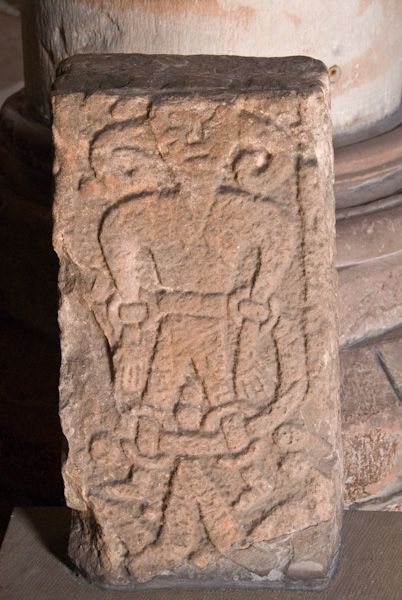
Famous tales
The Forging of Mjolnir
Loki stirs up mischief among the dwarves and almost loses his head, but ultimately gives the gods several priceless gifts, including Thor’s mighty hammer.
The Fortification of Asgard
A giant agrees to build a much-needed wall around the gods’ celestial stronghold, but his price is terrible. Loki saves the gods through a scandalously lewd act.
The Kidnapping of Idun
As a result of further mischief from Loki, the gods almost lose one of their most beloved companions.
The Tale of Utgarda-Loki
Thor and Loki travel to the land of the giants and engage their hosts in a series of contests.
The Death of Baldur
Baldur, one of the most cherished gods, dies an improbable death through the wickedness of Loki.
The Binding of Loki
Loki is punished in a particularly agonizing way for his murder of Baldur.

Credits
Please let us know if u have not been credited. We are gratefull to all people bringing this wonderful subject back to us.
References:
The writings of Dr. Jackson Crawford and Daniel Mc Coy are a neverending inspiration and most favoured of sources. the blog of Dr. Karl E. H. SeigfriedNorse-mythology.org
English editions: Saxo Grammaticus, The History of the Danes, Books I–IX, ed. and trans. Hilda Ellis Davidson and Peter Fisher. Latin text and English translation: Saxo Grammaticus, Gesta Danorum: The History of the Danes, ed. Karsten Friis-Jensen, trans. Peter Fisher. Cf. also Georges Dumézil, From Myth to Fiction: The Saga of Hadingus, trans. Derek Coltman.
References: [1] Sturluson, “Gylfaginning,” 55. ↩ [2] Saxo Grammaticus. 1905. The History of the Danes. Book VIII. [3] Turville-Petre, E.O.G. 1964. Myth and Religion of the North: The Religion of Ancient Scandinavia. p. 138.

