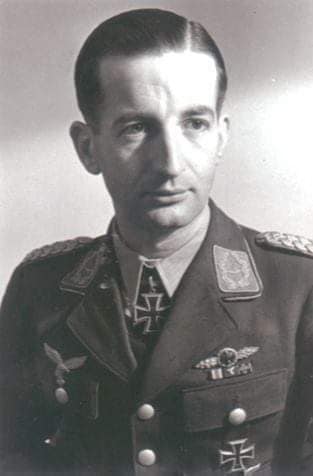
A few days later, Falck was ordered to fly back to Breslau to see Hermann Goring on account of the success of him and the group (Geschwader) in Poland.
On meeting the Reichsmarshall, Falck was unceremoniously handed an Iron Cross, 2nd Class, in a cellophane bag.
It wasn’t long after that meeting that "The Fat One" visited the airfield near Kielce, Poland, where Falck’s unit was stationed.
A few days later, Hitler visited the same airfield. Falck had gained recognition as a brave and capable pilot. By the end of that month, he was promoted to captain.
He gained three victories over Polish aircraft before the unit was relocated to Jever on the German Bight.
Here he took part in the air battle with RAF Wellington twin-engine bombers attacking Wilhelmshaven on 18 December 1939.
He claimed two of the bombers shot down, although one of his claims was not confirmed, but Falck had to force-land on Wangerooge after return fire from the gunners of the bombers damaged his engines.
19 February 1940, Hauptmann Falck was appointed Gruppenkommandeur of I./ZG 1, based at Düsseldorf. The Gruppe was relocated to Barth on the Baltic coast at the beginning of April.
On 9 April 1940, Falck led the unit in the invasion of Denmark.
He recorded his eight, and final, victory when he shot down a Danish Fokker C V recce plane (R-49) belonging to the 5. eskadrille that was taking off from Vaerlöse airfield.
It was while he was based at Aalborg in the north of Denmark that Falck, following the unmolested bombing of the airfield by RAF bombers in the pre-dawn hours, prepared a comprehensive report on the theories of night interception.
As a result of being on the receiving end of bombing, Falck put together a report on the feasibility of intercepting these night raiders. His ideas incorporated the use of radar, searchlights, flak and fighters used in conjunction and organized into a grid section representing a designated area.
Falck’s report, written in the April 1940, included details on aircraft modifications, ground organizational requirements as well as necessary pilot skills. The report passed up to the Luftwaffe command. It wasn’t long afterwards when General Erhard Milch flew to Aalborg to discuss the report in detail.
I./ZG 1 participated in the battle for France and, with that campaign successfully concluded, against the RAF from a base near Le Havre.
Soon after flying in the Battle of France, General Kesselring ordered Falck to withdraw the Gruppe to Düsseldorf and reform the unit in the night fighter role.
His report had obviously made an impact.
On June 26, 1940, Goring, with Falck in attendance, announced to a group of Luftwaffe Generals (including Kesselring and Udet) that he was forming a new night fighter wing and appointing Hauptman Falck as its first commander.
Falck was the youngest person then in the Luftwaffe to be promoted to such a rank. Nevertheless, since he was the first commander of the new unit, his pilots and crews dubbed the young captain;
“The Father of the Night Fighters.”
It is a title that has stayed with him to this day.
Thus Falck became Kommodore of NJG 1 on 26 June 1940.
Major Falck received the Ritterkreuz on 7 October 1940.
His work was largely organizational as he had been ordered not to fly operationally–the Luftwaffe deemed him too valuable to lose. It was an order Falck found difficult to accept. It obviously kept him from being able improve his tally of enemy kills.
Nevertheless, during these years he helped to establish an effective night fighter force–one that grew in complexity as tactics and equipment evolved.
He was to lead NJG 1 for three years and five days but his legacy was to establish, in partnership with General Josef Kammhuber, an effective night fighter force.
In January of 1943, he was promoted to lieutenant colonel.
On 1 July 1943, Falck was promoted to the rank of Oberst and transferred to Generalstab as Kammhuber’s representative at the Luftwaffenführungsstab.
The Falck/Kammhuber partnership was dissolved when they failed to agree on the direction of the night fighter arm.
In September 1943, Falck was appointed to a position with the Luftwaffenbefehlshaber Mitte, based in Berlin, responsible for the day and night fighter defence of the Reich – a central post responsible for coordinating and administering ground and air defenses for all of Germany.
An unforeseen event was to suddenly change his circumstances.
He held the position until the abortive bomb plot against Hitler in July 1944.
On July 20, 1944, as Falck was sitting in his office in the Berlin suburb of Wannsee, he received a call from a colleague informing him of Claus von Stauffenberg’s attempted assassination of Adolf Hitler.
Falck had known von Stauffenberg since 1936, and had seen him as recently as a week or two before the attempt. Making things even a bit more uncomfortable for Falck was that he had links with the von Stauffenberg family through his mother-in-law.
In fact, he was renting a small unit at the time that belonged to a von Stauffenberg cousin. All of his clothes and belongings were in that unit and would prove to be very incriminating if discovered.
As the arrests were being made that same evening throughout Berlin, Falck was concerned that the hysteria following the assassination attempt would somehow lead to him being implicated.
Through his friendship with Adolf Galland, he obtained a quick transfer in August 1944 and was appointed Jagdfliegerführer Balkan, based at Pancevo near Belgrade in June 1944.
He arrived in Belgrade the day Romania switched sides in the war. Five days later Bulgaria followed suit. Falck was forced to withdraw to Vienna.
Quite likely, the transfer out of Berlin saved his life.
Falck was to become General Flieger-Ausbildung, responsible for all the Luftwaffe training schools, shortly thereafter.
However on 1 March 1945, he was given an assignment commanding fighters in the Rhineland.
He was destined never to take up the command, eventually becoming a prisoner of the Americans on 3 May 1945 in Bavaria. He was released on 7 June 1945, after a very short time in captivity.
When asked about the Aces that served under him, Falck had this to say;
Qustion-
You knew men such as Prince Heinrich zu Sayn-Wittgenstein, Helmut Lent, Hans-Joachim jabs and Heinz-Wolfgang Schnauffer. What was your opinion of them?
Falcks reply;
"Well, you mentioned the best pilots in the world when it came to night fighting. Prince Wittgenstein was a nobleman, not a National Socialist. He fought for Germany as had his family for five hundred years, and he was quite successful and a true gentleman, as were all of them.
He was killed in the war, as was Helmut Lent, who won the Diamonds and had over a hundred victories.
Hans Jabs is still a good friend of mine who finished the war with the Oak Leaves and fifty victories, and the best was Schnauffer with 128 kills, all at night.
Schnauffer died in France after the war in an automobile accident, a tragic way to go. He also held the Diamonds.
These were extraordinarily brave men. All of these men were under my command and all were outstanding persons; full of idealism and first rate hunters and great pilots. They were very distinguishable people, strong willed and very ambitious, but in a good sense.
They were highly intelligent with immediate responses to crises, untiring and happiest when they were on flight operations. Each in is own way was a unique character, but very reliable and I was proud to have known them."
Post war Falck undertook a variety of jobs including farming and working for a pharmaceutical company. He even worked for the British Army as a Civil Officer at the stores section of the 47th Royal Engineers.
He attended night school and studied business, which resulted in his gaining a role selling playing cards. In 1961, after becoming the manager of the company, he was approached by North American Aviation to undertake aviation consultancy work.
In 1966, he joined McDonnell Douglas. On retirement from business in 1986, he lived in St Ulrich in Austria. He continued his love of flying post war, joining many flying clubs.
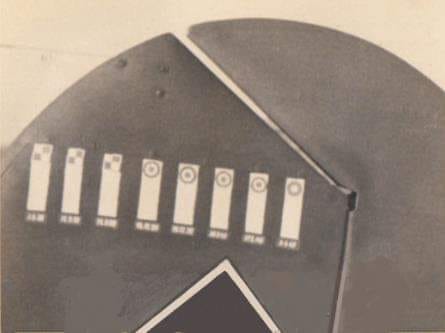
Wolfgang Falck is credited with seven victories in about 90 missions, all gained while flying the Bf 110. All his victories were scored in daylight.
 Nazi Germany
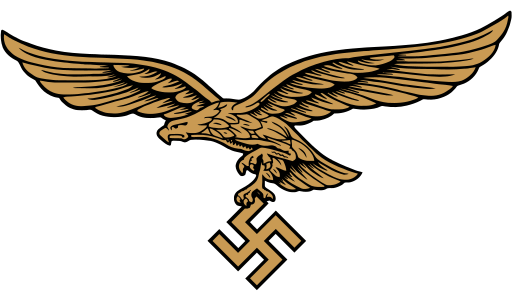
 Luftwaffe
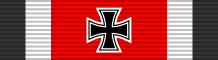 Knight's Cross of the Iron Cross
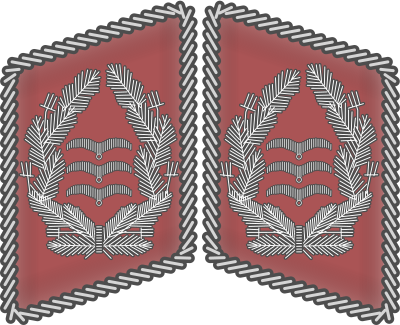 Oberst