Jörmungandr
[ˈjɔrmunˌɡandr̥]
The Great Beast
Loki's spawn
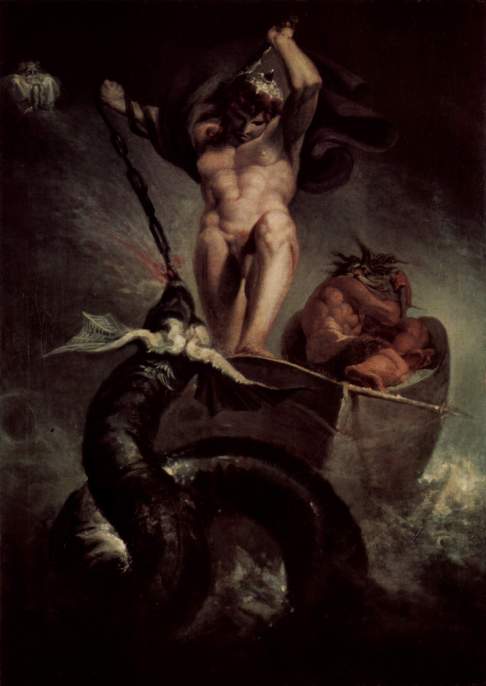
Jormungand (pronounced “YOUR-mun-gand;” Old Norse Jörmungandr, “Great Beast”), also called the “Midgard Serpent (Old Norse: Miðgarðsormr),” is a snake or dragon who lives in the ocean that surrounds Midgard, the visible world. So enormous is he that his body forms a circle around the entirety of Midgard. He’s one of the three children of Loki and the giantess Angrboða, along with Hel and Fenrir.
Nemesis
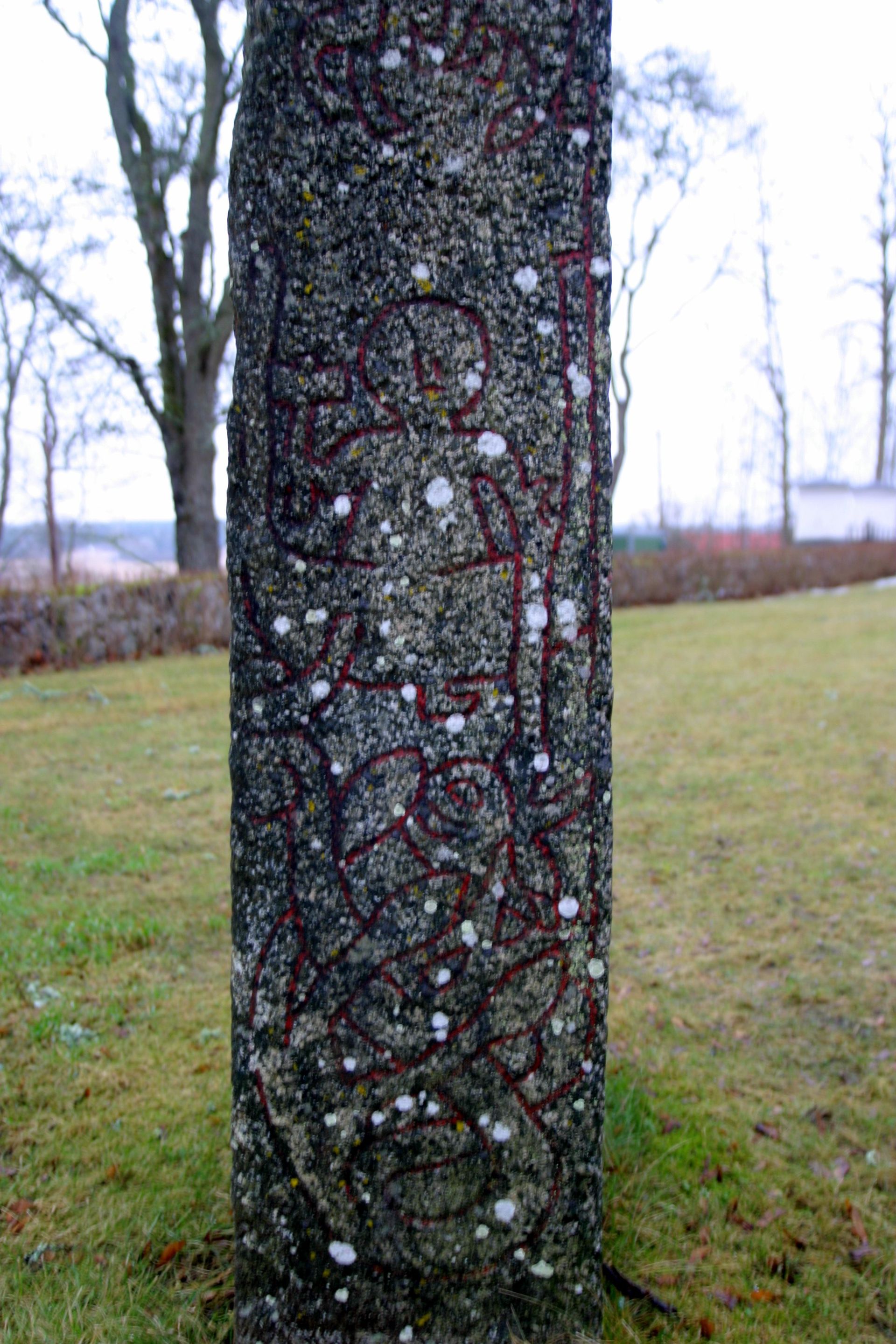
The god Thor is his particular enemy. Two battles between them are recounted in the Eddas. In one, Thor fishes for Jormungand, and fails to pull him up only when the giant Hymir, terrified that this will bring about Ragnarok, severs the line, sending the snake back down to the depths. When Ragnarok does arrive, however, Thor and the Midgard Serpent are fated to slay each other.

Old Germanic Roots
Jormungand likely already featured in the religion of the original Germanic tribes, as evidenced by his existence in the later pre-Christian religions of different branches of the Germanic peoples. For example, continental Germans attributed earthquakes to his movements well into the Middle Ages.
Myths and Legends
There are three preserved myths detailing Thor's encounters with Jörmungandr:
Lifting the cat
In one, Thor encounters the giant king Útgarða-Loki and has to perform deeds for him, one of which was to lift the serpent in the form of a colossal cat, disguised by magic, as a test of strength. Thor is unable to lift such a monstrous creature as Jörmungandr, but does manage to raise it far enough that it lets go of the ground with one of its four feet. When Útgarða-Loki later explains his deception, he describes Thor's lifting of the cat as an impressive deed.
Thor's fishing trip
Another encounter comes when Thor goes fishing with the giant Hymir. When Hymir refuses to provide Thor with bait, Thor strikes the head off Hymir's largest ox to use as his bait. They row to a point where Hymir often sat and caught flat fish, where he drew up two whales, but Thor demands to go further out to sea, and does so despite Hymir's protest.
Thor then prepares a strong line and a large hook and baits it with the ox head, which Jörmungandr bites. Thor pulls the serpent from the water, and the two face one another, Jörmungandr dribbling poison and blood. Hymir goes pale with fear, and as Thor grabs his hammer to kill the serpent, the giant cuts the line, leaving the serpent to sink beneath the waves.
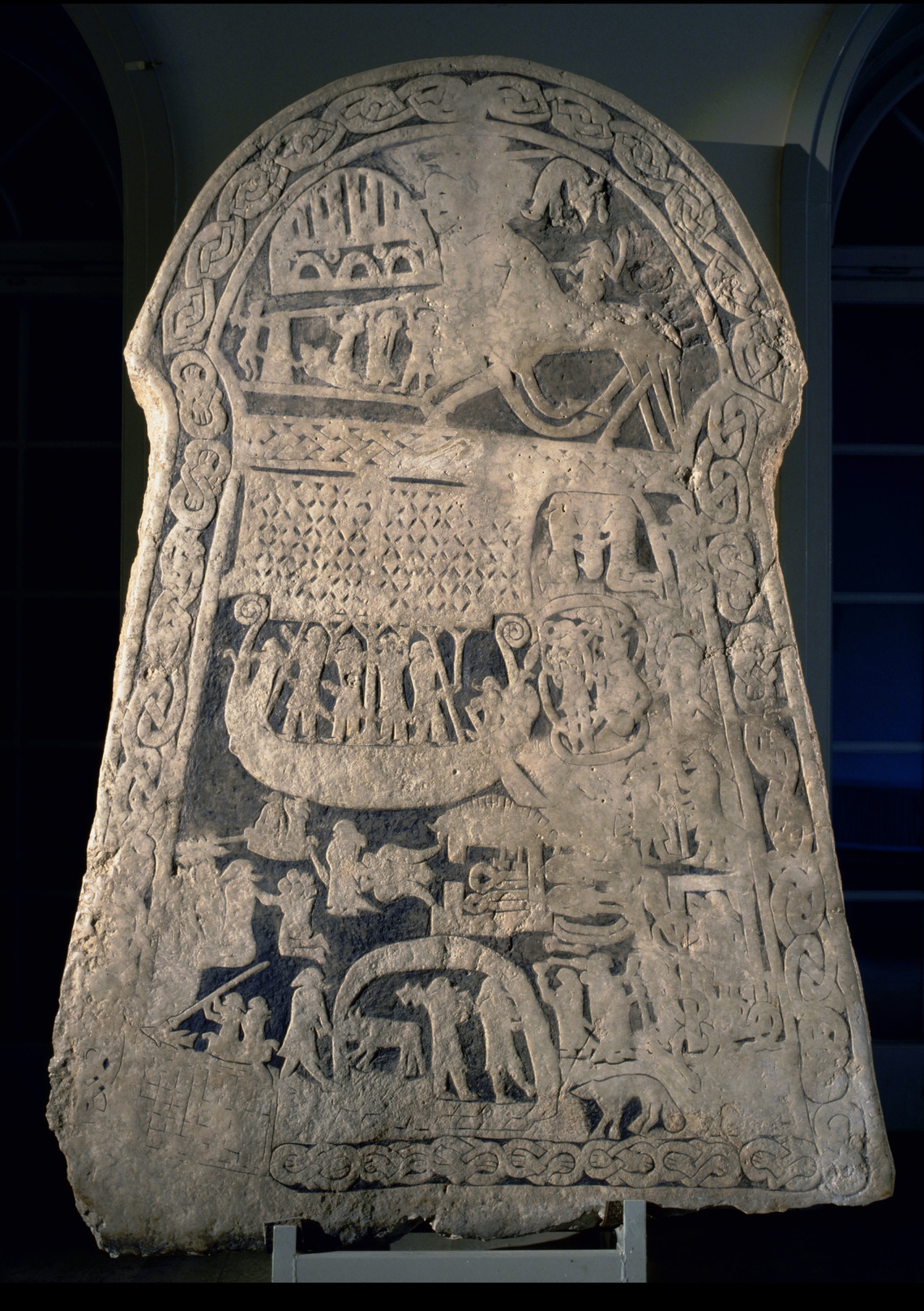
This encounter with Thor seems to have been one of the most popular motifs in Norse art. Four picture stones that have been linked with the myth are the Altuna Runestone, Ardre VIII image stone, the Hørdum stone, and the Gosforth Cross. A stone slab that may be a portion of a second cross at Gosforth also shows a fishing scene using an ox head. Of these, the Ardre VIII stone is the most interesting, with a man entering a house where an ox is standing, and another scene showing two men using a spear to fish. The image on this stone is dated to the 8th or 9th century. If the stone is correctly interpreted as depicting this myth, it demonstrates that the myth was in a stable form for a period of about 500 years prior to the recording of the myth in the Prose Edda around the year 1220.

Myths and Legends
There are three preserved myths detailing Thor's encounters with Jörmungandr:
Lifting the cat
In one, Thor encounters the giant king Útgarða-Loki and has to perform deeds for him, one of which was to lift the serpent in the form of a colossal cat, disguised by magic, as a test of strength. Thor is unable to lift such a monstrous creature as Jörmungandr, but does manage to raise it far enough that it lets go of the ground with one of its four feet. When Útgarða-Loki later explains his deception, he describes Thor's lifting of the cat as an impressive deed.
Thor's fishing trip
Another encounter comes when Thor goes fishing with the giant Hymir. When Hymir refuses to provide Thor with bait, Thor strikes the head off Hymir's largest ox to use as his bait. They row to a point where Hymir often sat and caught flat fish, where he drew up two whales, but Thor demands to go further out to sea, and does so despite Hymir's protest.
Thor then prepares a strong line and a large hook and baits it with the ox head, which Jörmungandr bites. Thor pulls the serpent from the water, and the two face one another, Jörmungandr dribbling poison and blood. Hymir goes pale with fear, and as Thor grabs his hammer to kill the serpent, the giant cuts the line, leaving the serpent to sink beneath the waves.
This encounter with Thor seems to have been one of the most popular motifs in Norse art. Four picture stones that have been linked with the myth are the Altuna Runestone, Ardre VIII image stone, the Hørdum stone, and the Gosforth Cross. A stone slab that may be a portion of a second cross at Gosforth also shows a fishing scene using an ox head. Of these, the Ardre VIII stone is the most interesting, with a man entering a house where an ox is standing, and another scene showing two men using a spear to fish. The image on this stone is dated to the 8th or 9th century. If the stone is correctly interpreted as depicting this myth, it demonstrates that the myth was in a stable form for a period of about 500 years prior to the recording of the myth in the Prose Edda around the year 1220.
Final Battle
The last meeting between the serpent and Thor is predicted to occur at Ragnarök , when Jörmungandr will come out of the sea and poison the ocean and the sky. Thor will kill Jörmungandr and then walk nine paces before falling dead, having been poisoned by the serpent's venom.
Credits
Please let us know if u have not been credited. We are gratefull to all people bringing this wonderful subject back to us.
References:
The writings of Dr. Jackson Crawford and Daniel Mc Coy are a neverending inspiration and most favoured of sources.https://mythology.wikia.org/Kershaw, The One-eyed God; Régis Boyer, “Óðinn d’après Saxo Grammaticus et les sources norroises: étude comparative,” Beiträge zur nordischen Philologie 15 (1986): 143– 57; Peter Buchholz, “Odin: Celtic and Siberian Affinities of a Germanic Deity,” Mankind Quarterly 24:4 (1984): 427–37; Lotte Motz, “Óðinn’s Vision,” Maal og Minne 1 (1998): 11– 19; Clive Tolley, “Sources for Snorri’s Depiction of Óðinn in Ynglinga Saga: Lappish Shamanism and the Historia Norvegiae,” Maal og Minne 1 (1996): 67–79
Emma Groeneveld

